


Frequently Asked Questions
We tried to collect the most frequently asked questions by our customers. Are you interested in the price of foam insulation? Call us or write to us email!
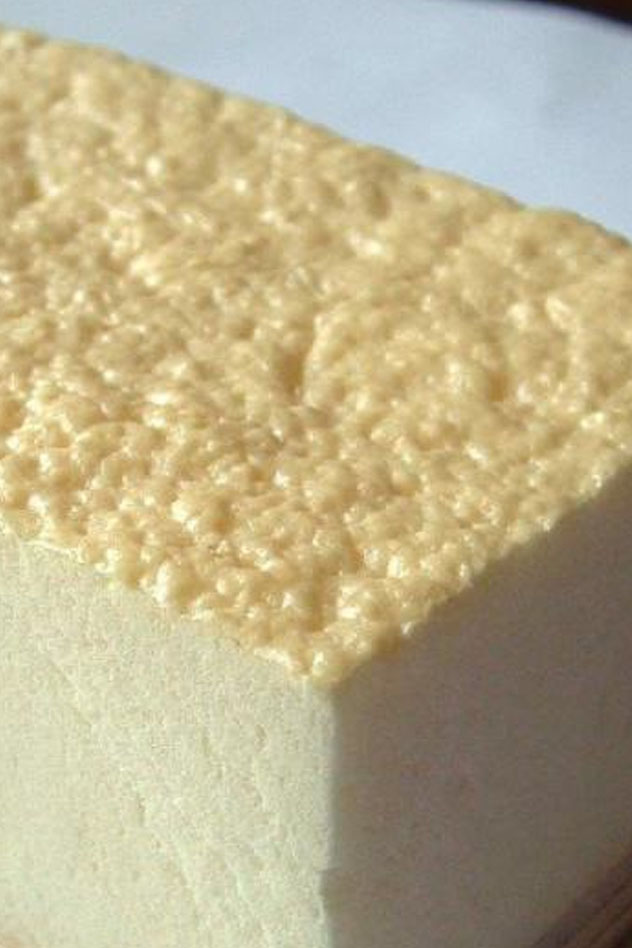
News and interesting things from the world of purhab

Closed or open cell foam?
How do we insulate the attic? Open and closed? Open-cell foam insulation Open-cell polyurethane foam insulation is a lighter material, its cells are partially open, which allows air to flow. It was developed in the 1980s and in the 90s it became...
Scattered purfoam insulation price - what does it depend on?
The price of dispersed foam insulation in 2024 will typically be around HUF 5,000 net. This price is for the stronger, heavier closed-cell material, including the minimum thickness of 3 cm. It is also true for purhab that you should not decide solely on the basis of price. It is important what density and quality of foam we insulate with. There are dozens of brands of closed-cell polyurethane foam on the market, representing different quality categories.
Where can it be used? What material does it stick to?
It can be used on almost any construction material used today: concrete, brick, plaster, tar insulation, wood, plasterboard, trapezoidal sheet, flat and corrugated slate. Porous surfaces and insulation of plastics are undertaken after separate consultation.
Is it more expensive than traditional insulation?
It is important to know that the prices we give include not only the cost of materials, but also the execution. An important advantage is that with our technology you don't have to dismantle it in most cases. Overall, it can be said that the price of purfoam is competitive if you calculate the costs associated with the installation of other materials (transportation, dismantling and removal of old layers, complicated fixing, longer construction time, cleaning). In connection with the renovation of a flat roof or lightweight buildings, it is clearly an unbeatable solution. In addition to the higher price compared to cotton, the new generation insulation brings many advantages. therefore, it is also increasingly popular in the attics of family houses.
Harmless to health?
Purfoam has been used around the world for 60 years. A misconception about polyurethane is that it can negatively affect air quality or even cause poisoning. There is no scientific basis for this. In Canada and the USA, the material has been used as insulation for half a century, and its popularity is unbroken. Closed-cell foam does not emit harmful substances, so it does not affect the health of the people living in the building. Polyurethane is the most effective insulation available today, it is resistant to mold, moisture and other harmful substances.
What thick layer should I order?
Closed-cell foam replaces twice the thickness of cotton or styrofoam insulation, so it can be said to be approximately twice as effective. Closed cell foam: 0.021 W/mK, cotton 0.044 W/mK, EPS 0.048 W/mK.
With the technology, we can realize a thickness between 3-20 cm. If waterproofing is the goal, a minimum thickness of 3 cm is perfectly sufficient. Where thermal insulation is also important, we recommend a greater thickness. A minimum of 6-8 cm is recommended for the attic or side walls of residential buildings.
How durable is it? Does it break down over time?
One of the advantages of foam insulation is that it resists structural damage/degradation and does not collapse. Purfoam has been used all over the world for more than 60 years, the experience is that it does not lose its thermal and waterproofing properties even during this time. According to the International Association of Certified Home Inspectors, the lifespan of sprayed foam is more than 80 years.
What if insects attack the foam?
Purfoam helps to prevent attacks by insects and other pests, as it seals the gaps where rodents usually enter. The foam does not attract insects because it is not attractive as a food source.
Is polyurethane foam a green product?
All insulating materials have a beautiful mission: saving energy. Foam insulation can significantly reduce the energy required to heat or cool buildings. The use of insulation reduces electricity demand, helps conserve valuable fossil fuels, while reducing associated greenhouse gas emissions during power generation. In this sense, our insulation is a green product.
THE foam is produced by a complex chemical reaction, where the two main components are polyisocyanate and polyol. Some purfoam raw materials are produced from renewable sources, such as natural oil polyols based on soybean or castor oil. These natural polyols are chemicals that are mixed and reacted with other chemicals to create polyurethane foam.
What are the dangers of sprayed foam insulation?
Gases released during foam insulation and exposure to harmful chemicals can cause lung and eye irritation, shortness of breath, sore throat and fever. However, you can avoid these harmful effects if you use protective equipment during the production of foam insulation. We ask that homeowners stay away from the area while the foam is being sprayed to avoid possible contact with the chemicals. The foam sets immediately and airs out, so you can safely return home after an hour or two.
How to remove closed cell spray foam?
Rub off the foam with a dry cloth, if necessary use acetone on the affected area to remove the particles. On external surfaces, you can use a pressure washer to remove particles.
What is the difference between open-cell and closed-cell polyurethane insulation?
There are two general categories of polyurethane foams: open-cell, low-density and closed-cell, medium-density. Both foam categories provide excellent insulation and air sealing. Although both are made using nearly identical chemical reactions, there are some inherent differences in physical properties that often determine which product is chosen for a given project.
Open cell spray foam has an open cell structure where the cells are filled with air. The open cell structure forms a soft, flexible foam with a density of approximately 8-10 kg/m3. These insulations work by reducing natural air movement, thereby reducing the thermal conductivity of the material. Its fine cell structure makes it breathable at certain thicknesses, drastically reduces air leakage through the building envelope, significantly reducing the building's heating and cooling costs. It is permeable to moisture, so in colder climates it may be necessary to install a vapor barrier.
Closed-cell material has a closed-cell structure that creates a rigid, hard foam with a density of 35-55 kg/m3. It has been shown to strengthen the structure of the building. These smaller cells trap an insulating gas called a foaming agent. This blowing agent has a lower thermal conductivity than air and increases the R-value. Its structure makes it waterproof, it can also be used in places where contact with water is likely (e.g. on the outside of plinth concrete walls in contact with the ground).
Can it be used with other insulations?
Closed-cell material can be used in combination with other insulation materials such as fiberglass, cellulose and foam board products. These cost-effective hybrid systems use closed-cell foam for insulation and air sealing, and use other insulations to provide assembly R-values that meet energy codes.
Is it true that it emits odors?
Some materials have a paint smell for a few hours after application. They do not indicate a chemical hazard, but they can cause discomfort. To avoid unpleasant odors, it is recommended to thoroughly ventilate the work area.
Polyurethane particles on surrounding objects.
During the insulation, small polyurethane particles circulate in the air. These pica drops are difficult to remove. Impossible from most porous surfaces. On smooth surfaces, the purfoam particles can be mechanically removed with the help of polishing and washing materials. All surfaces that you want to protect from contamination should be covered before insulation!
Maintenance of flat roofs
A roof insulated with purfoam, if the faded polyrea coating (UV protection) is regularly checked and repainted every 10 years, can easily survive even the building itself! Regular, even annual, inspections of the foam are recommended to identify damaged areas, drainage problems, and evaluate the condition of the UV protective coating.
Your address goes here
Content goes here. Edit or remove this text inline or in the module's Content Settings. You can style every aspect of your content in the Design Options module, and even apply custom CSS to this text in the Advanced Options module.
Can the foam insulation be repainted?
Exterior work requires a protective coating on the foam to protect it from UV light and surface damage. Depending on the climate, the type of coating, and the overall thickness of the coating, these coatings last for 5 to 20 years. Regular checks should be made to determine if repainting is necessary.
When should we make the foam insulation?
Spray polyurethane insulation is installed at the same point in the construction cycle as other insulation. They usually insulate after installing water pipes, electrical wires, and heating and air conditioning ducts. If you install a solar panel on the roof, it is worth attaching the support brackets to the roof before the insulation. Overall, it can be said that it is recommended to do all the preparations before the insulation, so that the professionals who come after us do not have to damage the heat and water insulation we have made.
Can anyone make spray foam insulation?
No. Applying sprayed polyurethane requires serious equipment and a professional trained in the safe and proper installation of a polyurethane system.
Which foam is the better sound insulator?
To reduce noise, open or closed cell material is both a good choice.
Phone: 06 70 719 4557
Applications of spray foam

Flat roof
Waterproofing and thermal insulation of new and old flat roofs, without dismantling the existing bituminous surface, with a 10-year warranty.
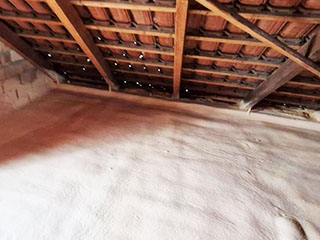
Attic floor
Since the majority of heat loss occurs through the floors, attic insulation is of utmost importance.
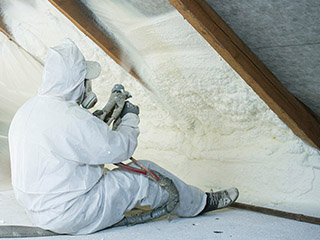
Attic
If the attic is still uninhabited, we insulate from the inside, between the rafters. Gap-free insulation never moves.

Hall, warehouse
An unbeatable solution for lightweight buildings. Say goodbye to condensation problems!

Stable, barn, grain storage
Sterile and washable surface without the need for complicated fixing. Up to 1000 m2 per day.
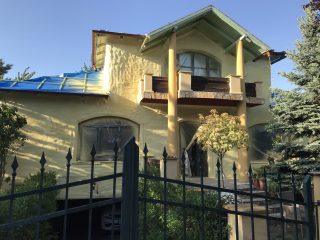
Side wall
Thermal and sound insulation of internal side walls, as well as expanded foam thermal insulation of external facades.
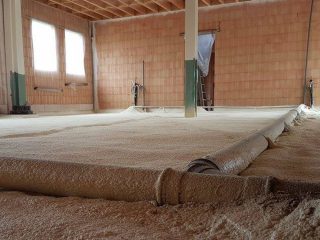
Slab insulation
Walkable foam is an excellent solution for special shaped walls, around pipes, or on uneven floors. Half the thickness is enough.
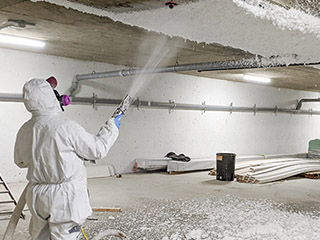
Ceiling insulation
If there is an unheated living space under your home (such as a basement or underground garage), it is important to insulate the ceiling.
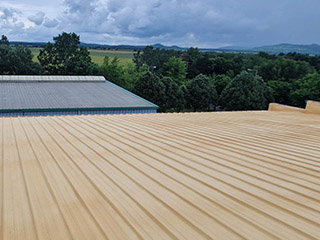
Trapezoidal plate
In addition to leaks, condensation problems are the biggest problem with trapezoidal sheet metal buildings. We will solve your problems.
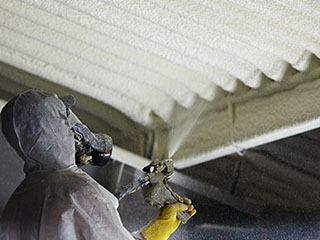
Corrugated slate
Most slate roofs are uninsulated and get wet; their effective insulation is only possible with closed-cell foam.
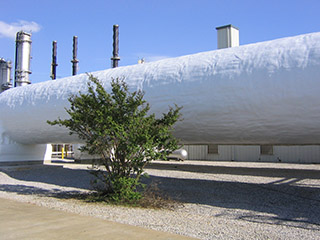
Tank, container
Form-fitting thermal insulation and corrosion protection of tanks with fast progress. Even insulation of underground tanks.

Terrace
Effective heat, water and sound insulation of terraces! The closed-cell material can be concreted, paved, or even built on a green terrace.
Request an offer!
Euro-Ker-Szig Kft.
4251 Hajdúsámson
Debreceni út 24
